
What DCR Holds in Hawaii
The corrections duties once sat with the Department of Public Safety. They moved to DCR on January 1, 2024. DCR's Corrections Division draws a line between jails and prisons. Jails hold people before trial and those serving very short misdemeanor terms. Prisons hold people serving longer sentences. That distinction matters when a name surfaces in a record search. A county police arrest might produce a brief DCR jail stay. A later prison sentence sits at a different stage of custody. DCR does not run the county police arrest logs. Someone can be booked by Honolulu, Hawaiʻi County, Maui, or Kauaʻi police. They may then be released before any DCR transfer. Another person lands in a community correctional center or prison. Others sit with federal authorities or Immigration and Customs Enforcement. Each custodian keeps its own records and its own search path. Finding nothing in one system does not mean a person is absent from the rest. The agency's home page and its Corrections Division description lay out the state role. Neither offers a public statewide page of offender photographs. Anyone hunting DCR mugshots should start with that limit. The state service covers custody status and notifications. A booking image must be requested from the police office that holds it.
DCR Mugshots Search Through SAVIN
Hawaiʻi SAVIN is the public DCR route, and it points to VINELink. SAVIN handles custody and parole status plus event notifications. It is not a mugshot locator. The 2025 DCR brochure covers searches by name, offender number, or case number. Notification options include phone, text, email, and in-app alerts. The service calls its notifications free, anonymous, and confidential. It also warns that data may be incomplete or inaccurate and should not be your only basis for safety decisions. The search form can show whether an event or status appears in this custody system. It cannot display an official DCR booking image. The public interface offers no general photo profile. A name match may not even refer to the same arrest or person. Compare whatever identifying details the service gives, then contact the record holder when a specific booking is the question.
| Search key | What it can help match | Limit |
|---|---|---|
| Name | A person listed in the SAVIN/VINELink service. | A name alone may match more than one person. |
| Offender number | A DCR record identifier when it is known. | It is not a police booking number. |
| Case number | A case-linked custody or notification record. | It does not open a court document or a photo profile. |
| Event notification | Custody, parole, release, or escape-related event notices. | Notifications do not confirm a current police warrant. |
- Open the DCR SAVIN page and follow its link to VINELink.
- Choose a search route the live service supports, such as a name, offender number, or case number.
- Check that the result is tied to Hawaiʻi DCR, then read the status, facility, or event details that are shown.
- Set up only the notification type needed, using the current phone, text, email, or app options.
- If the need is a police arrest record or booking photo, contact the arresting agency instead of treating SAVIN as a photo search.
The 2025 Hawaiʻi SAVIN brochure lays out the public status and alert route, while the VINELink interface presents the separate search and notification screen.
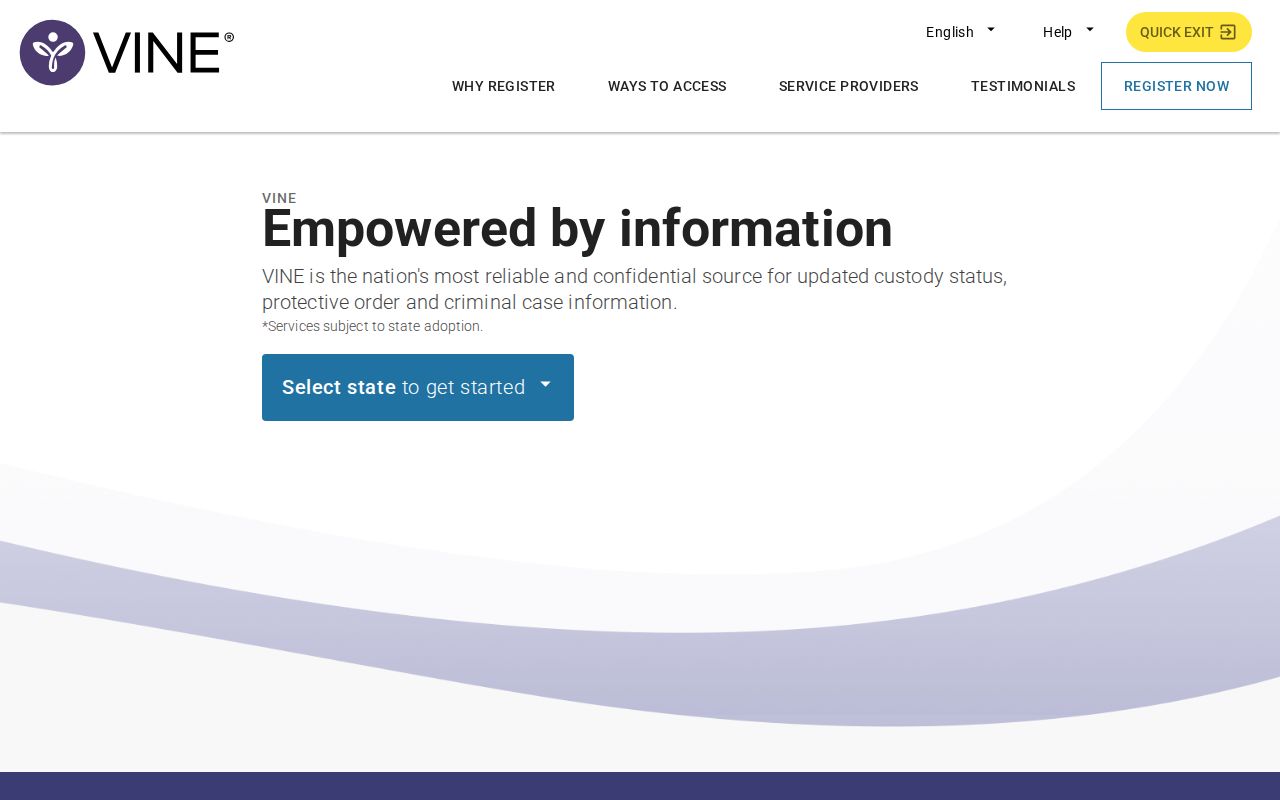
Use this neutral interface to check status or set up alerts. It shows no booking photo and makes no police booking record searchable.
A DCR Result Does Not Show a Photo
The public SAVIN and VINELink materials contain no general inmate profile. There is no mugshot field, no downloadable booking image, and no public photo archive. A result may return custody or parole information. It may also show facility details or an event notice. There is no public DCR photo profile to open. That is the key limit for anyone searching Hawaii records. The word "mugshot" often appears in a web search. That does not mean DCR publishes a state prison image of each person. DCR's policy index lists COR.08.11, Inmate Identification Photographs, effective January 1, 2024. An internal identification-photo policy creates no public name search and no photo access. DCR publishes no public photo-update policy. It makes no promise that a released or discharged former offender stays searchable with a photo. A third-party result cannot fill that gap or confirm what DCR holds today. The DCR policy index is the official home of COR.08.11. It lists agency policies rather than offering an offender-photo lookup.
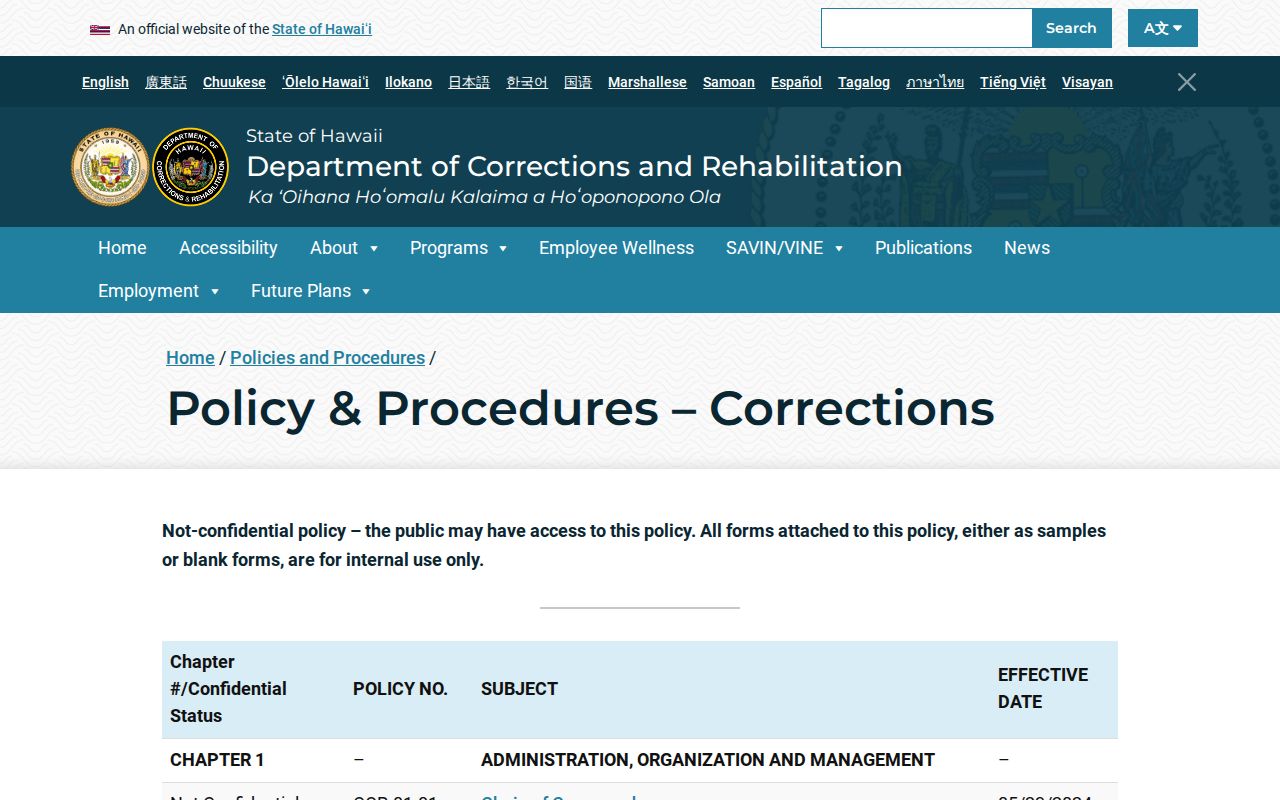
Treat the policy listing as a way to identify the internal rule. It implies no public search service and no schedule for posting new images.
Busted Mugshots vs DCR Custody
A police booking photo and a DCR custody event come from different records. The police agency logs the arrest and booking. DCR logs its own custody, transfer, parole, and release events. A person can pass through both layers. Even so, the files never merge into one shared profile. Police photo access varies by local policy. No county policy creates a state DCR photo database.
| Record layer | What it documents | Public photo route |
|---|---|---|
| County police booking | An arrest and booking handled by a police department. | Ask the arresting police agency. Online photo access and retention depend on that agency's rules and review. |
| DCR custody / SAVIN | State custody, parole, release, and related notice events. | SAVIN/VINELink is not a public mugshot profile. Make a specific UIPA request for a DCR-held record. |
| Federal or immigration custody | A separate federal or ICE custody record. | Use the relevant federal locator for status. The public search is not a mugshot source. |
Hawaiʻi County Police publishes a countywide booking-log PDF. That feed is still a county police product. It is not a DCR offender profile. The official booking-log page shows how a county record can live on a different channel.
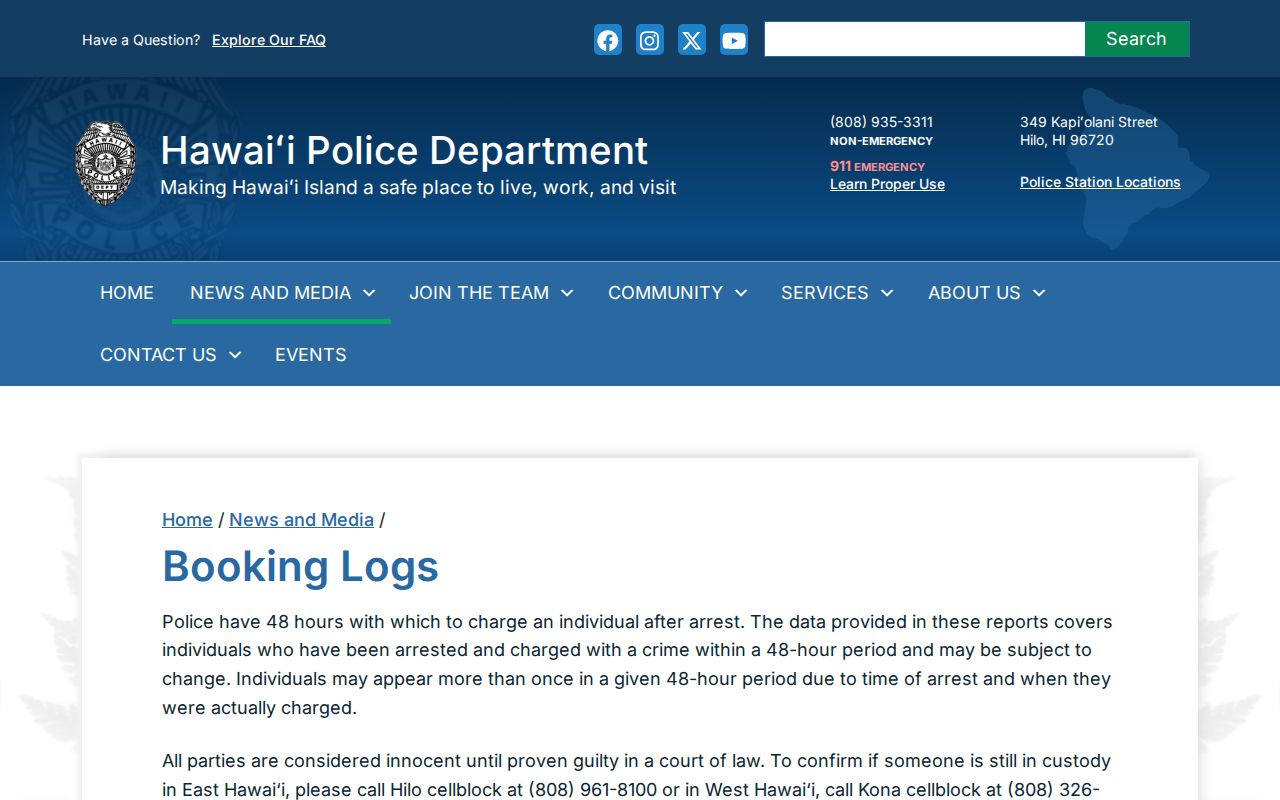
A police arrest log and DCR custody are two different things. The log stops at booking; the corrections record picks up later, if at all. For routing, start at the Hawaii arrest and records search hub, then pick the arresting county in the County Directory.
Request a DCR Record or Photo
Written requests work better than cold calls. The DCR frequently called numbers page shows the public records line. The Office of the Director sits at 1177 Alakea Street in Honolulu, reachable at (808) 587-1288. Follow whatever directions the agency currently posts. Don't trust a general call to reach the records custodian.
Hawaiʻi's Uniform Information Practices Act shapes how a request should read. Name the facility if you know it. Add the person's full name. Include a rough date range and any offender or case number on hand. Say exactly what you want. That could be a custody record, an identification photo, a booking photograph DCR holds, or a written policy. Keep in mind that a photo may not exist in the file. Even if one does, release is never automatic.
| Include | How it narrows the search |
|---|---|
| Person's name and any known DCR number | Helps staff distinguish a DCR record from a same-name police or court record. |
| Facility or custody location, if known | Points the request to the relevant DCR office or record group. |
| Date range or related case number | Limits the time and event covered by the request. |
| Exact record type | Separates custody status, an identification photo, a policy, or another DCR-held record. |
| Preferred delivery format | Tells the agency how to provide a responsive public record. |
Timing matters here. The Office of Information Practices request instructions give an agency ten business days to grant, deny, or ask for more time. Extenuating circumstances can stretch that by ten more. Along the way the agency might seek clarification, require prepayment, redact passages, or withhold material under an exception. Those are standard UIPA windows. Nothing guarantees a photo by a fixed date.
No reason for the request is required. Still, precision pays off. A clear, narrow ask helps DCR find the right file and spot any limits. Request the record itself, not a profile or person-search service the agency does not run. When only part of a record is restricted, ask whether the rest can come out with protected details removed.
Several things can limit release. Privacy and security concerns, an open investigation, a court seal, expungement, or another law may all apply. Whatever the basis, the agency must review the actual record and cite a reason for any denial or redaction. The text of Hawaiʻi UIPA, Chapter 92F, governs the whole framework. It does not hand everything over without review.
Answer clarification requests by tightening, not widening, the date range or record type. Save any written denial and its stated basis. The Office of Information Practices can walk you through the process, though it never holds the underlying DCR custody record.
Hawaiʻi Department of Corrections and Rehabilitation
Office of the Director
1177 Alakea Street, Honolulu, Hawaiʻi
(808) 587-1288
Current frequently called numbers and records route
DCR Retention and Release
What disappears online may still sit in a file. A blank SAVIN result proves nothing about destruction, expungement, or existence. Neither does a dead link or a vanished image. Retention works on its own clock. A schedule sets how long a class of agency records must be kept. It also spells out how those records may be disposed of. No schedule promises that a given image will surface on a public site.
For DCR questions, one schedule matters most. The Hawaiʻi State Archives schedule index lists SA-1 Department of Corrections and Rehabilitation Records. It was added June 30, 2025. Start there when asking how long a record type lasts. The answer can turn on the record itself. It might be a custody event, an identification photo, a case file, or something else entirely. County police schedules follow their own rules, separate from DCR's.
The official State Archives retention schedule index links to those agency schedules, DCR's included. A request for the record itself still goes to the office holding it.
Expungement and sealing are legal processes, not website cleanups. A search result can vanish while the court order says nothing about the agency file. Any request has to respect the current order and its limits. Visibility, retention, and lawful access are three separate questions.
Federal and ICE Custody Paths
Federal custody never appears in a DCR lookup. For that, use the BOP Inmate Locator. The Bureau of Prisons database reaches back to 1982 and searches by name or BOP register number. Public fields may show a location or release status, though the details can lag. No booking-photo field exists there. That locator's plain status format is typical of how federal custody answers look.
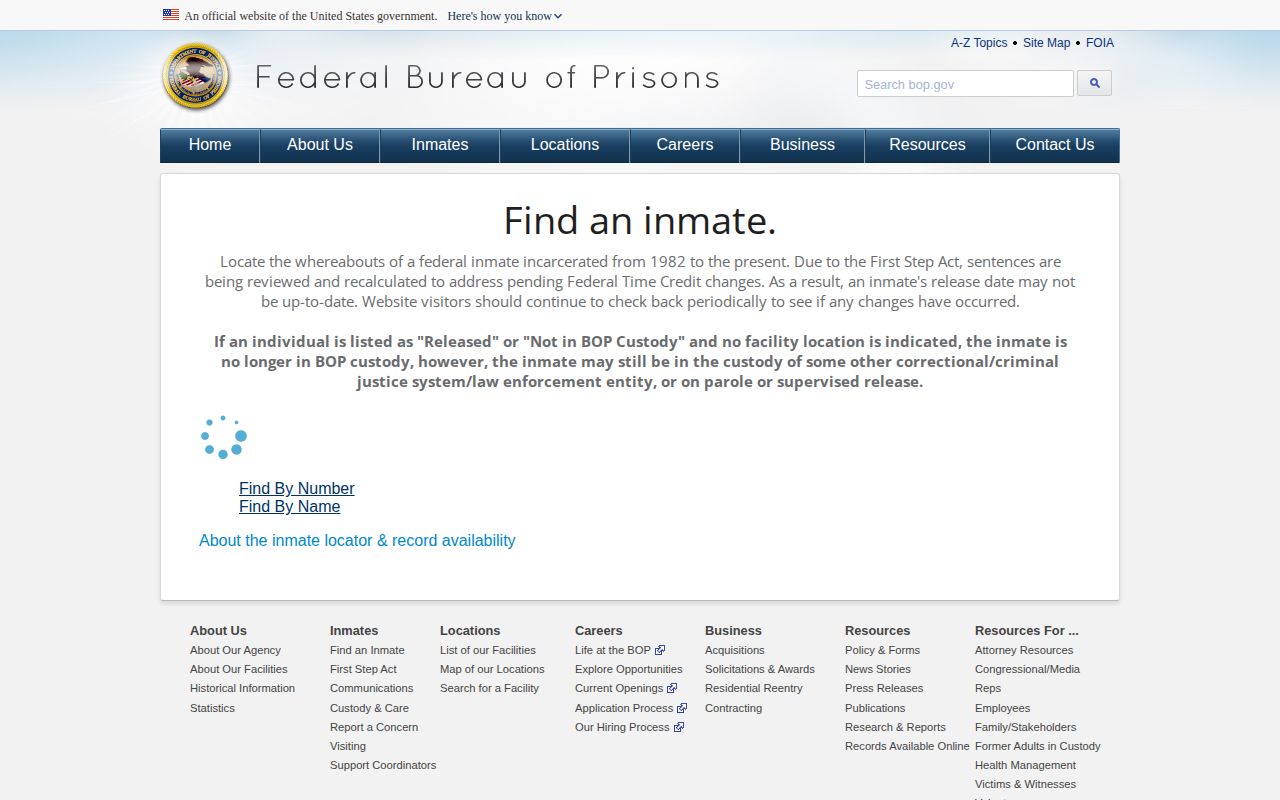
Federal cases live outside the state system. A federal hold creates no DCR record and no booking photo. Court dockets or official Department of Justice releases hold the case details. Immigration custody runs through its own tool, the ICE Online Detainee Locator. It is federal. It is not a public mugshot database, and it does not list every person arrested in Hawaiʻi. A blank result proves nothing either way. The person may still have a record elsewhere. When answers stay unclear, contact the responsible agency or get legal help rather than assuming separate custody systems share one statewide profile.
The U.S. Marshals Service is another wall. Under its general prisoner photograph policy, it does not release federal prisoner photos to the public. A public docket or charging document may still exist for the case. News images are not federal booking photos.
A Separate Covered Offender Registry
Hawaiʻi keeps one more public registry, and it works differently. The Covered Offender Registry is conviction-based, built under Chapter 846E. It covers people who meet the law's covered-offender rules. It is not a DCR inmate search. Nor is it a tool for browsing former offenders. A registrant's photo and registration details may appear there. That does not mean DCR posts a public photo profile for every person in custody. Use the Hawaiʻi Covered Offender Registry only for its registration data. It cannot replace DCR SAVIN for custody events, a county police request for a booking photo, or a court case search. One system's result is not another's record.
Keep the record layers clear. A booking is an arrest event, custody is a status, and a charge is what prosecutors have filed. Check the court disposition for how the case ends.