
Hawaii Historical Record Trails
The Hawaiʻi State Archives sorts records by creator. Agency, organization, or person comes first. An old booking image may therefore hide under "police records" or "prison inspectors" rather than under the word "mugshot." Finding aids describe collections and flag records that may sit inside. They are not a statewide catalog of every arrest photo ever taken.
Different questions lead down different trails. State Archives may hold transferred records and historic images. A police or corrections agency may still keep a file that never left its shelves. Court case material sits with the Judiciary. That is not the same as a booking record. Old newspapers and digital collections add context, but a clipping is not the original file and may not show how a case ended.
Start with the creator. The State Archives research and finding-aids page explains how to begin with the creating agency and its collection description.
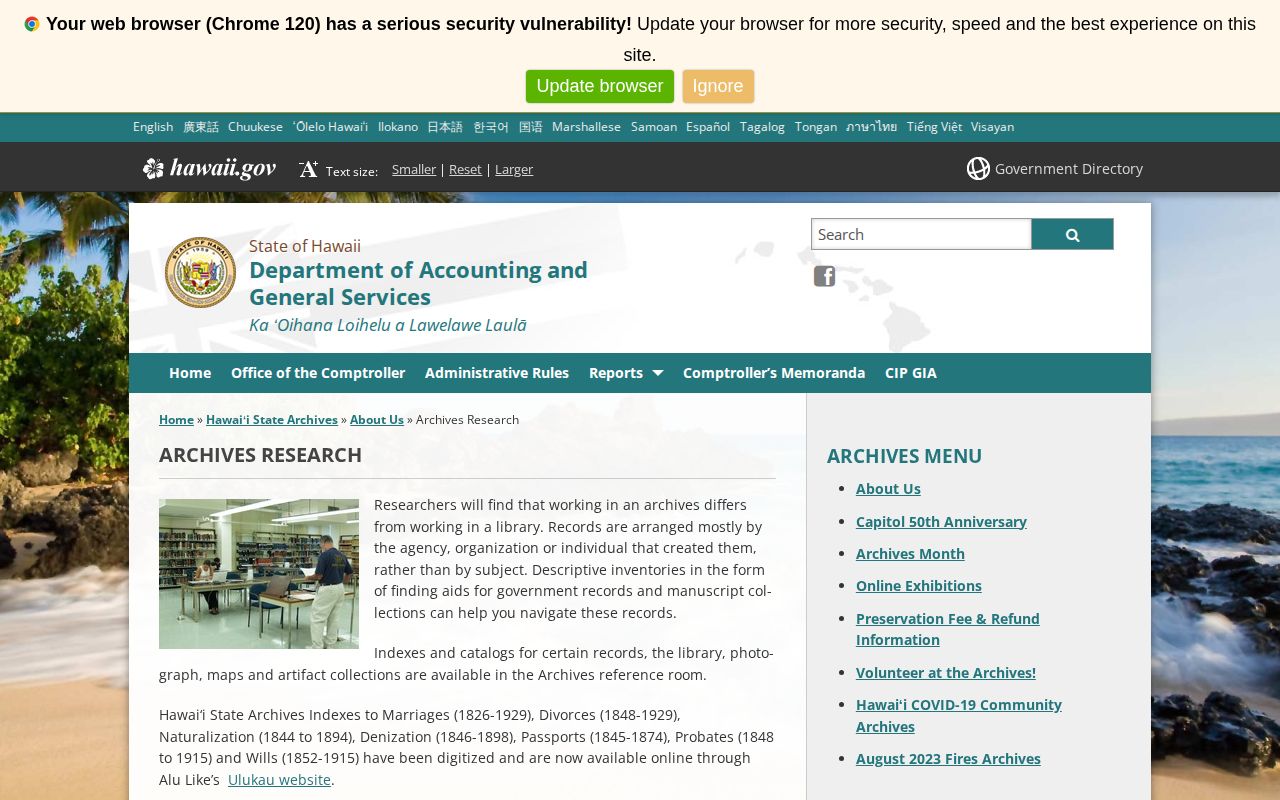
Read the finding aid and spot a likely series. Then ask Archives staff about it. A listing is only a lead, not proof that a mugshot book survived or was digitized.
Hawaii Archive Collection Leads
These archival leads cover corrections and public-safety history. Dates shown are collection spans. They come from finding aids, so they promise neither mugshots nor any individual case file. Search by record creator and series title, then confirm scope and access with Archives staff.
| Collection lead | Era shown | How to use it |
|---|---|---|
| Police Records | 1844–1918 | Search the government collection finding aid for the creating agency, record group, and description. |
| Board of Prison Inspectors | 1891–1905 | Use the listed board and prison-inspector entries as leads, then ask staff what files and formats survive. |
| Prison Inspectors, First Judicial Circuit | 1905–1906 and 1927–1931 | Search by circuit and date range. Do not assume the entry is a photo index. |
| Department of Public Safety | 1851–1941 | Review the agency description and related series. A collection title alone does not identify individual contents. |
| Photograph collection and Digital Collections | Dates vary by item | Check the Archives image finding aid and the transition from Digital Collections to Digital Archives. |
The Archives' Digital Collections page notes that material is being merged into Digital Archives. Both platforms help with historical images. Neither offers a public gallery of modern county booking photos. A historic portrait counts as a booking image only in one case. The catalog or record itself must say so.
Hawaii Mugshot Retention Schedules
Each agency and record series sets its own retention rules. A website's display window is not a retention period. A vanished PDF proves nothing was destroyed. Hawaiʻi's Office of Information Practices keeps a Records Report System. It lists record titles, custodians, storage and retrieval details, and retention periods. Public or confidential status appears there too, along with legal authority and routine users. That is records metadata. It does not hold the arrest file or the photograph itself.
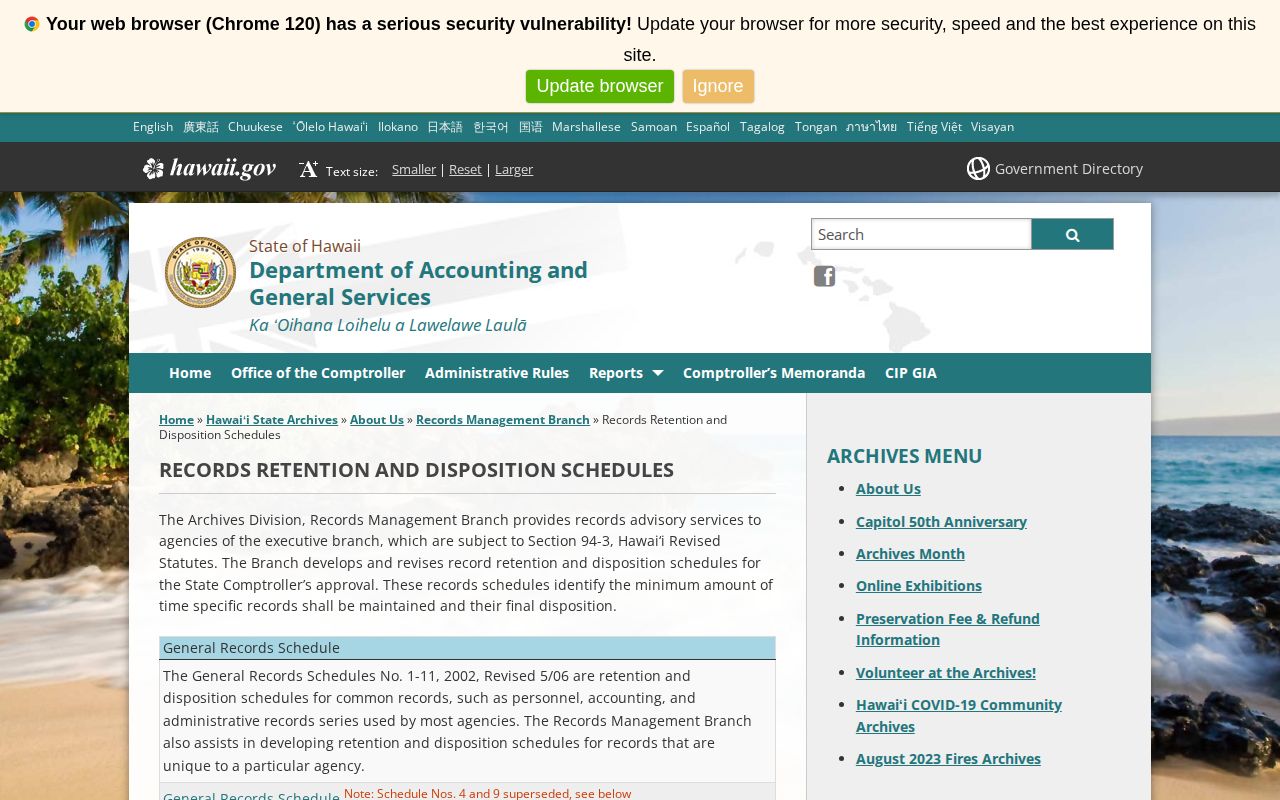
State Archives also publishes retention and disposition schedules. A Department of Corrections and Rehabilitation schedule was added June 30, 2025. Check the DCR schedule and its index for current terms and agency. County police records may follow a different schedule. DCR rules do not bind them. A Maui schedule covers booking books and mugshot files. That example fits Maui alone. It cannot be stretched to Honolulu, Hawaiʻi County, Kauaʻi, or Kalawao.
The State Archives retention schedule index links to each agency schedule. It also explains the role schedules play in records disposition.
For a modern booking photo, ask the creating agency. Its records custodian can say whether the file still exists and which schedule applies. Eligibility for destruction is not destruction. Ask whether the record was actually disposed of, since a schedule alone cannot answer that case-specific question.
Note: Retention schedules govern agency records, while online search results describe only what a website currently displays.
Request Hawaii Archival Records
Give staff enough detail to separate records. Note the island or place. Add the likely agency and the person's name. An approximate year or era and the record type matter too, whether that means a police register, prison file, identification photograph, court record, or another item. An exact case number helps, but a date and agency can still narrow a search.
- Search the State Archives finding aids by creating agency, organization, or record group. Try period terms such as police records, prison registers, or identification photographs, not only “mugshot.”
- Contact the Archives reference staff through the research page before ordering. Ask whether the described series covers the date and type of record and whether access restrictions apply.
- If staff identify a responsive item, use the order or scan form listed on the Archives forms and fees page. State which pages or images you want and the requested delivery method.
- Check the posted fee and prepayment rules before placing the order. Keep the reply and payment details with the reference number or collection description.
- If the record is modern or was never transferred, ask the arresting police department, DCR, county records section, Judiciary, or Hawaiʻi Criminal Justice Data Center instead.
State Archives lists its reference desk at 364 South King Street in Honolulu, telephone (808) 586-0329, with public hours Monday through Friday, 9 a.m. to 4 p.m. The research page is the best place to confirm current access and contact details before visiting or sending a request. Archives staff can explain how to search what they hold; they cannot produce an untransferred police record.
The request path is different from a UIPA request for a recent police record. For a current photo or booking file, contact the agency that created it. For an old transferred item, identify the Archives collection first so staff can tell whether an order or scan is possible.
Modern Records vs Archives
New arrests rarely reach a historical archive right away. Begin with the county police agency that handled the booking. Hawaii has no single public mugshot archive covering every island, and Honolulu, Hawaiʻi County, Kauaʻi, Maui, and Kalawao each run their own public logs and records routes. The statewide County Directory points to the right county. For recent logs, custody status, and photo requests, the Hawaii booking-record lookup names the official source that covers each route.
A court file answers a different question. It traces what happened after the arrest. The Judiciary's eCourt Kōkua and JIMS availability material explains case searches, document access, sealed-record limits, and older case identifiers. A court index is not the booking agency's photo file. It can still surface a case number first. The Judiciary case-record information shows the electronic court access route and its document limits.
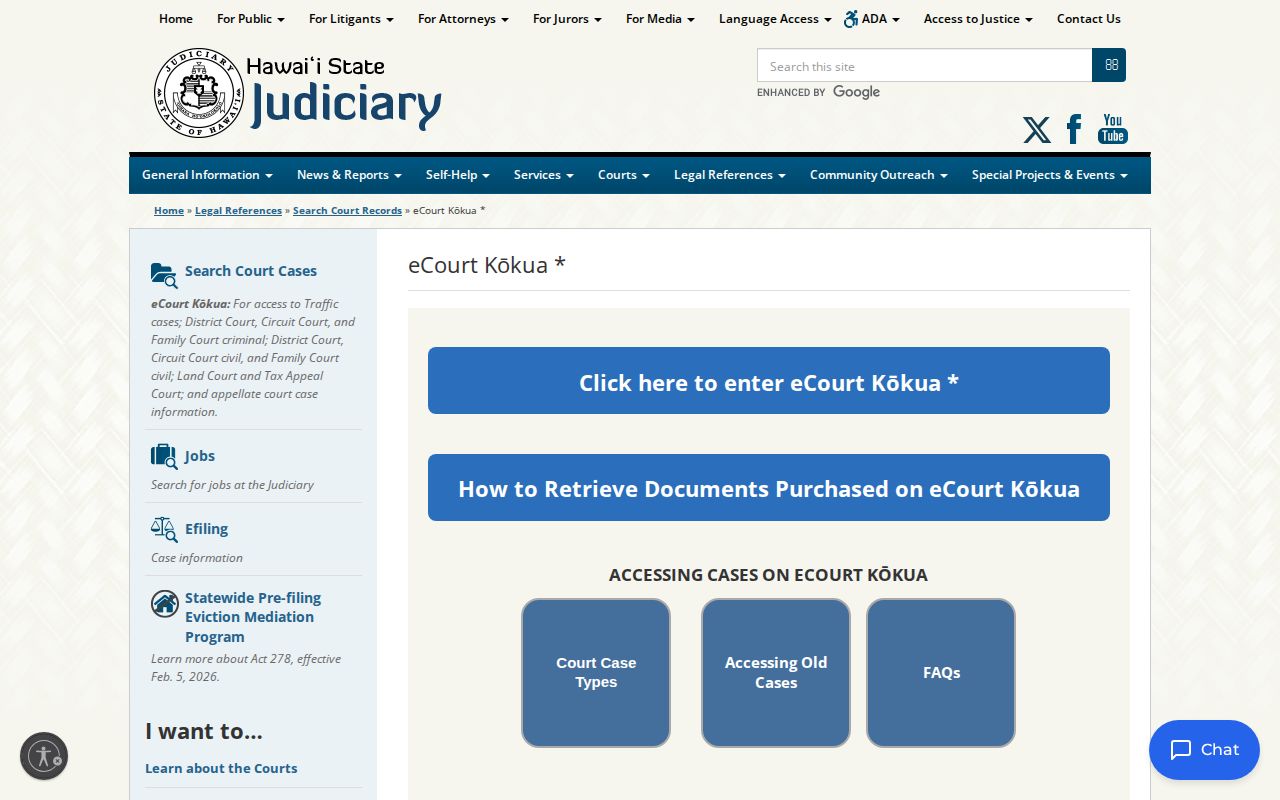
Sometimes the case never shows up in the online index. When that happens, follow the Judiciary's courthouse and records instructions instead. Match each request to the right office. Ask the booking agency for a photo. Ask the court for a document. The Archives handles a transferred historical collection.
Hawaii Archives Fees and Scans
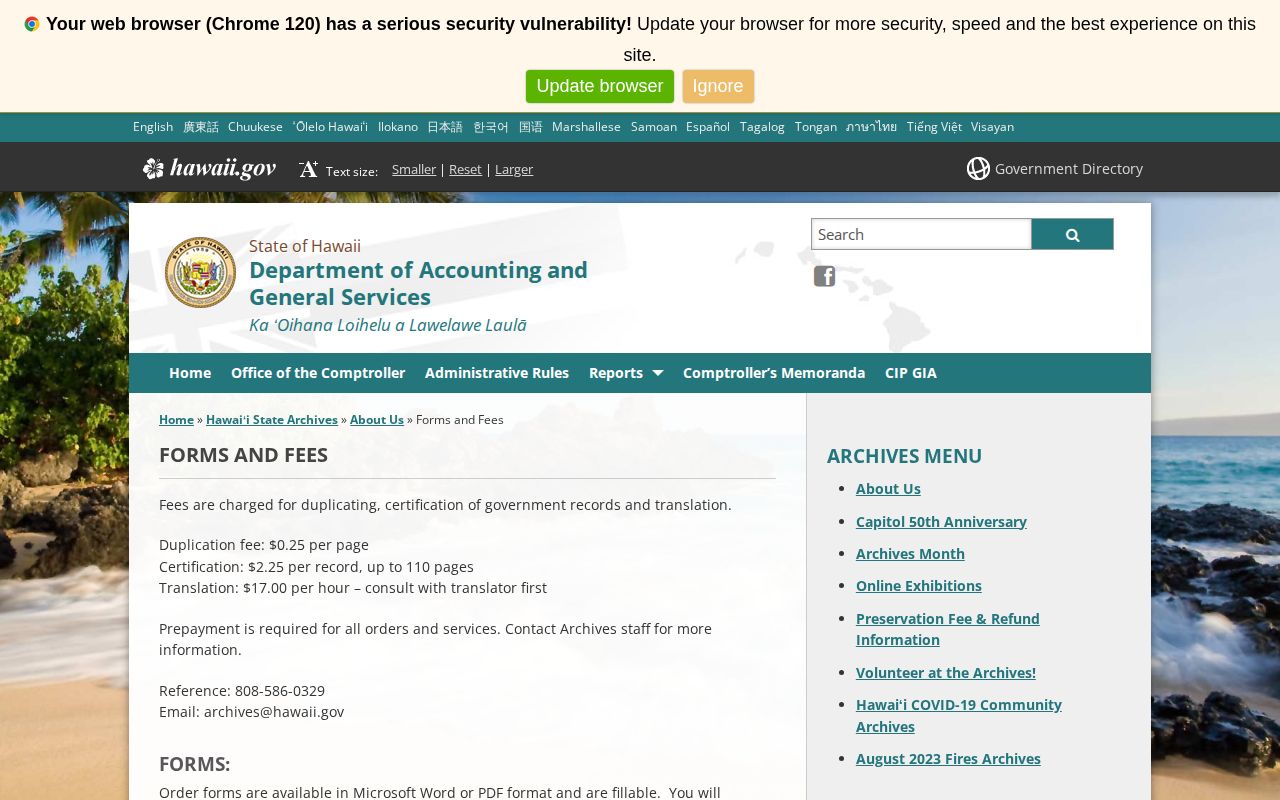
After Archives staff identify an item, the forms page tells you how to order service. The published schedule covers duplication, certification, and translation charges. Scans go through the Photo/Document Scan Order Form. Access limits and the fee terms in effect at the time of the request still apply. Prepayment is required, so confirm the total first.
| Published service | Fee shown | Important detail |
|---|---|---|
| Page duplication | $0.25 per page | Ask which pages can be copied and whether a scan order is the right form. |
| Record certification | $2.25 per record, up to 110 pages | Certification is a separate service from an ordinary copy. |
| Translation | $17 per hour | Confirm the expected work and total before prepayment. |
The forms and fees page lists every order form, current charge, and payment instruction.
Published charges can change. Check the live schedule before ordering, especially for certification, translation, or multi-page requests.
Reading Hawaii Historical Records
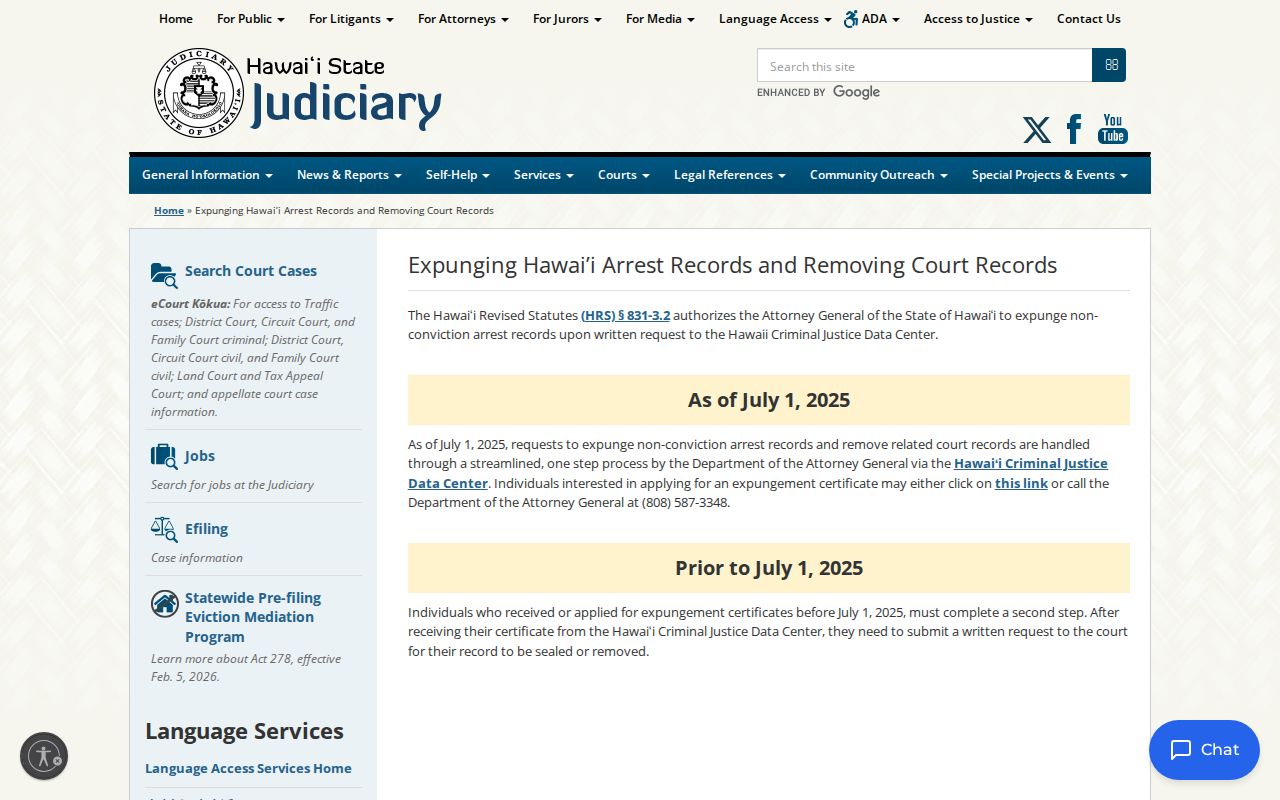
Archives hold three different kinds of evidence. Each answers a different question. A police register can list an arrest with no final judgment beside it. The court file may later show dismissal, acquittal, reversal, or some other outcome entirely. A photo, meanwhile, may lack the description needed to tie it safely to the right person. Name matches are not proof of identity. Neither is an old caption. Expungement and sealing add another wrinkle. The Judiciary explains how qualifying expungement orders are handled and why the order's coverage matters. That helps when a historical case still appears in an electronic court search, though it cannot erase every private clipping or copy. The Judiciary's court-record sealing instructions describe the current route for qualifying records.
Family and local histories often mention old cases. When you retell one, state exactly what the record says. Note plainly when the final outcome is unknown. A surviving photograph simply shows that the historical record itself still exists.