
Hawaii's Wanted Notice Network
Hawaii has no single public roster where you can search every name the state wants. The Department of Law Enforcement publishes public-safety material, yet it offers no name-search table comparable to a booking roster. So a practical search runs agency by agency. Local police may seek someone tied to one investigation. Crime Stoppers asks for tips. DCR puts out escape notices for specific incidents. The U.S. Marshals Service profiles fugitives through its district task force.
Each channel does its own job. One wanted page shows a photo and asks for help. A media release may name a suspect or describe one who has not been identified. A custody alert reports a status event. None of these amounts to a list of every open warrant. Check the agency named on the notice and confirm its current status before acting. The statewide Department of Law Enforcement site is a public-safety resource, but it is not a fugitive-search service for the public.
County Busted Mugshot Notices
Most public wanted notices come from county police and tip programs, rather than one state office. Their reach varies by island and by case. Honolulu Police Department maintains its Wanted Persons and Nā Maka pages. Hawaiʻi County Police Department posts media releases and a Crime Stoppers route. Maui Police Department uses public-assistance notices and Maui Crime Stoppers. Kauaʻi Police Department uses releases and Crime Stoppers Kauaʻi. These are selective notices, not full arrest lists. A notice may be removed or changed after an arrest, so an old search result should not be treated as current.
| Official channel | What it is for | What it does not establish |
|---|---|---|
| Honolulu PD Wanted Persons / Nā Maka | Police requests for help identifying suspects and locating people described in official notices. | A statewide roster or a current warrant check. |
| Honolulu CrimeStoppers | A local tip channel connected with Honolulu wanted notices. | A complete list of all Honolulu or state cases. |
| Hawaiʻi Police Department releases and Crime Stoppers | Case-specific police updates and public requests for information on Hawaiʻi Island. | Proof of guilt or a searchable list of all active warrants. |
| Maui Crime Stoppers and MPD public-assistance notices | Local information requests and selected notices from Maui County police. | A central county booking-photo search. |
| Kauaʻi Police Department releases and Crime Stoppers Kauaʻi | Official Kauaʻi notices and a community tip route. | A statewide search or a guarantee that an old post remains active. |
| DCR SAVIN / VINELink | Custody, parole, release, and escape-related notifications. | A public DCR absconder database or mugshot feed. |
| U.S. Marshals Service, District of Hawaiʻi | District task-force information and selected profiled fugitives. | A list of every local, state, and federal warrant. |
Honolulu Police also maintains an adult arrest-log page, apart from its Wanted Persons and Nā Maka notices. The official arrest-log interface links dated files. It records reported arrests, not warrants or wanted-person entries.
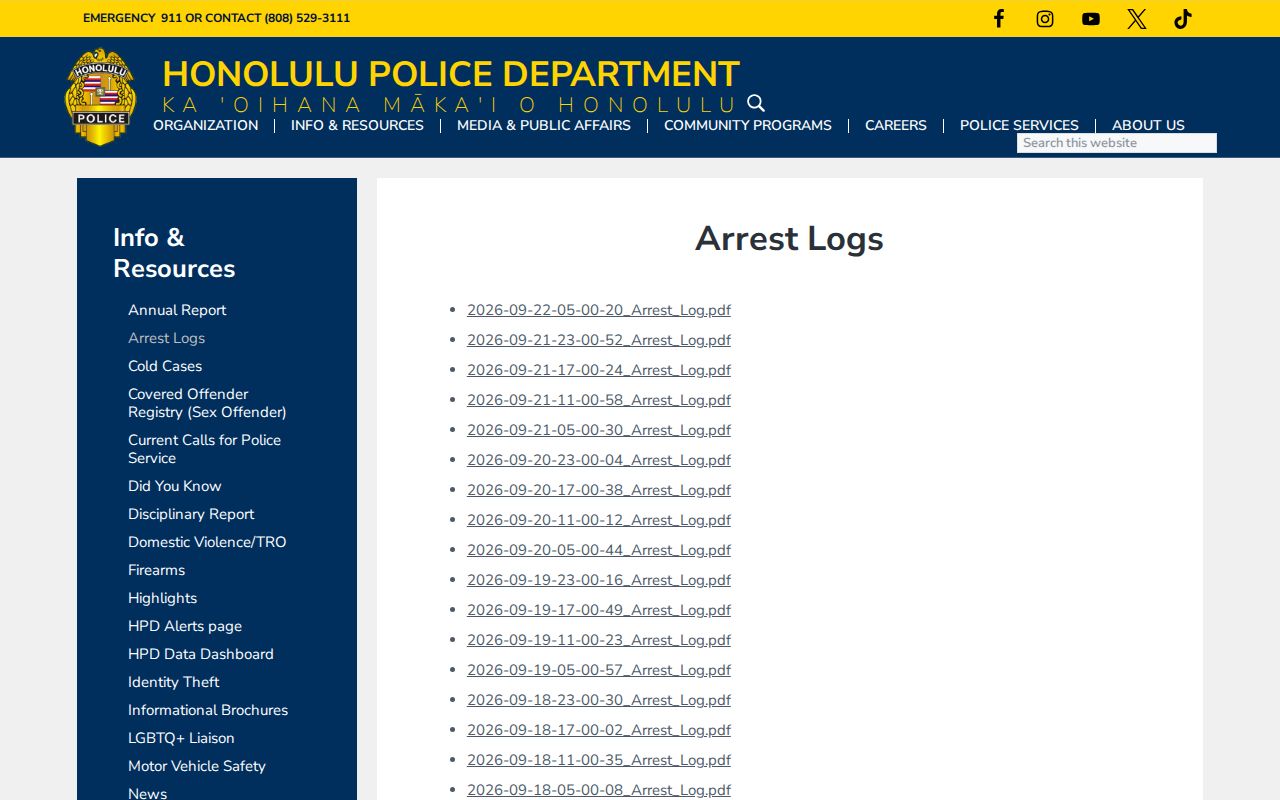
The two pages show why one county publishes an arrest log and wanted notices for separate reasons. A log's report date tells you nothing about whether a warrant stands today.
Read a Wanted Listing Carefully
No shared statewide form exists for wanted notices, and fields vary. Read what the issuing agency actually says before relying on a post. Photos stay on the police or federal source page. They are not copied or hosted here. A face alone proves little. A similar name can belong to someone else entirely.
| Detail to check | Why it matters | Limit |
|---|---|---|
| Name or suspect label | Shows who the agency is asking about, if a name is known. | A name match by itself does not prove identity. |
| Issuing agency and case context | Points to the office that can answer questions about the notice. | A repost may leave out the original case context. |
| Photo or description | May help the public understand whom police are trying to locate or identify. | Photos can be old, and a resemblance is not confirmation. |
| Alleged conduct or safety wording | Shows whether the agency is locating a suspect, wanted person, or a person in an escape notice. | It is an charge or public-safety statement, not a conviction. |
| Date, update, and contact route | Helps you reach the source and ask whether the notice is still current. | A search result can remain after the agency changes the original page. |
- Open the original county police, Crime Stoppers, DCR, or USMS notice.
- Read whether the page seeks help identifying a suspect, locating a named person, or reporting a custody event.
- Check the agency's date and any later update, then use its own contact instructions.
- Keep the photo on the official source page. Do not repost it as proof of identity or guilt.
Honolulu's Nā Maka posts usually ask the public to identify a suspect. Other county notices may name a person police want to locate. The wording matters. "Help identify" and "wanted" make different claims, and neither one means a person was "busted."
DCR Absconder Notices and SAVIN
DCR offers no public, searchable absconder database with a standing statewide list. A specific escape or release concern shows up instead in an individual DCR release. County police may also publish one. Hawaiʻi Police Department, for instance, has issued an event-specific notice. It concerns escapees from Hawaiʻi Community Correctional Center. That release covers one incident. It is not a recurring fugitive roster.
DCR's Hawaiʻi SAVIN page points to VINELink for custody status, parole status, and event alerts. The service tracks release, parole, or escape events. It is not a booking-photo search, and it does not replace a wanted notice. The VINELink search and notification interface shows the separate status-alert route.
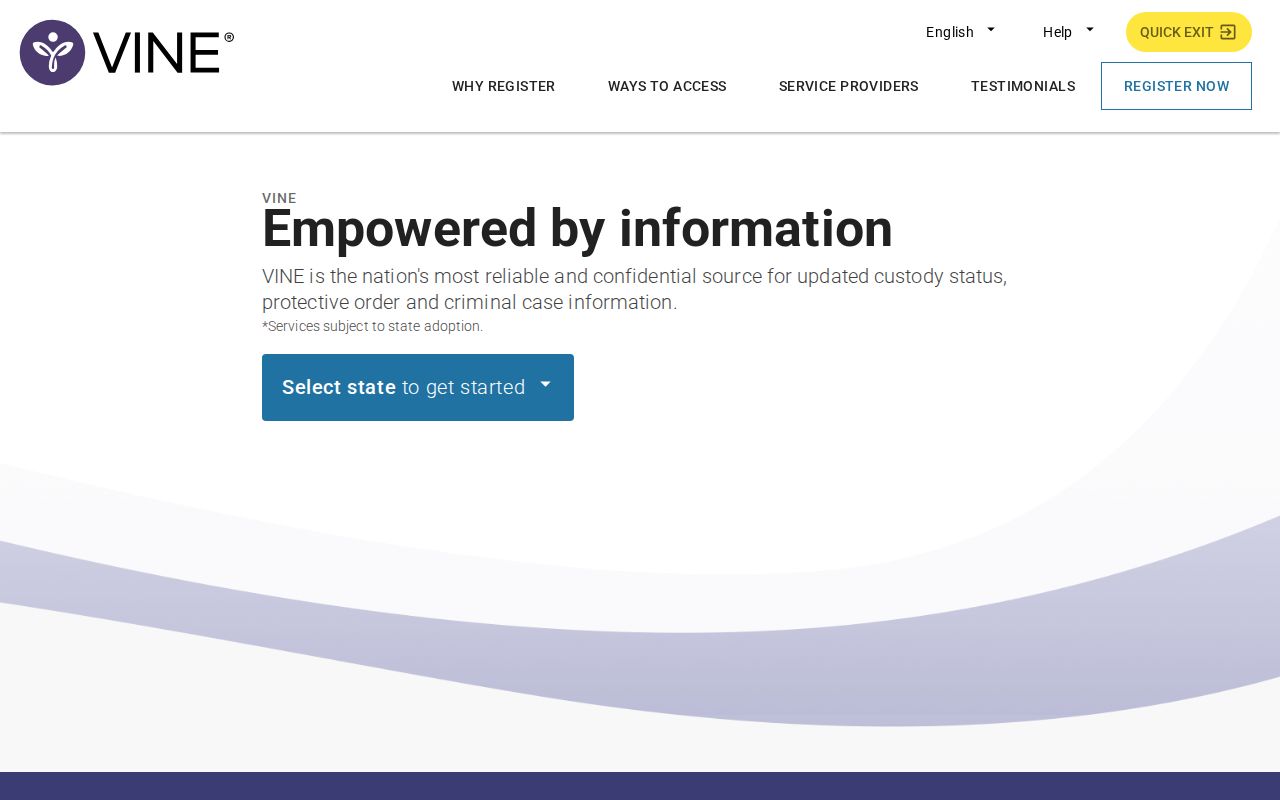
The neutral search form helps you set up an alert. A result is only a custody or parole-status signal. For a booking photo, go back to the arresting agency that created the record.
Safe Tip Routes for Wanted Notices
Send any tip to the agency or Crime Stoppers program named in the official notice. Hawaiʻi runs several separate programs, and anonymity rules and reward processes differ by channel. The U.S. Marshals Service District of Hawaiʻi posts profiled fugitives. It also staffs a 24-hour tip line at 1-888-869-4589. Use that line or the source agency's stated route. Skip unofficial reposts, and never share sensitive details in public comments.
- Open the issuing agency's original page and read the current instructions.
- Share only what you know, such as where and when you saw something, without trying to gather more information yourself.
- Use the listed police, Crime Stoppers, or USMS contact route and follow its guidance about anonymity or a tip code.
- Leave the response to law enforcement. Do not approach, follow, block, or try to detain the person.
Safety: Someone in a notice may be dangerous, misidentified, or no longer sought. Keep your distance, avoid confrontation, and report urgent concerns through the proper emergency channel.
U.S. Marshals Service, District of Hawaiʻi
Hawaiʻi Fugitive Task Force profiles and public tip route
Official district page
24-hour tip line: 1-888-869-4589
Check a Hawaiʻi Warrant Safely
A wanted notice alone won't settle whether a warrant exists. Hawaiʻi's Judiciary keeps its eBench system closed to the public. Only approved law-enforcement and criminal-justice users get in. The landing page describes the scope: traffic, criminal, and non-Family Court civil warrants. It refreshes several times a day. Those labels mark what the system can search. The public page offers no open name lookup and no guide to warrant types.
| Publicly named eBench group | Who can search | Public route |
|---|---|---|
| Traffic warrants | Approved law-enforcement and criminal-justice users | Ask the Judiciary, the relevant police agency, or counsel to verify a concern. |
| Criminal warrants | Approved law-enforcement and criminal-justice users | Do not treat a wanted post or a third-party result as confirmation. |
| Non-Family Court civil warrants | Approved law-enforcement and criminal-justice users | Contact the appropriate court or a lawyer for guidance. |
If you think a warrant involves you or someone you're helping, verify it the safe way. Skip the photos, social posts, and payment demands. The Judiciary's eBench Warrants page spells out the access limit. The public cannot search names there.
- Save the source and exact wording of the claim, including the agency or court named.
- Contact the relevant police department or Judiciary office through a number or address found on its official site, or ask an attorney to make the inquiry.
- If a warrant is confirmed, get instructions from counsel or the court about a safe, lawful way to resolve it.
- Do not pay a caller, click a message link, or try to hide from, evade, or interfere with law enforcement.
The public landing text names only three groups in eBench: traffic, criminal, and non-Family Court civil. No fuller breakdown exists in the state's public materials. So no other warrant subtype or rule gets assumed here.
Busted Records Do Not Confirm Warrants
An arrest log and a wanted notice answer different questions. A booking record documents an arrest event. A warrant system checks whether a court order is still live. A court file may show a charge, a hearing, or an outcome. None of that equals a live warrant check. When a notice leads to an arrest, track the agency's later update first. Then check the court record for how the case ended. The Judiciary's eCourt Kōkua information lays out the statewide case and disposition route. It can place a case after an arrest. That holds within the limits of sealed records and document rules. What it cannot do is turn a public case result into warrant confirmation.
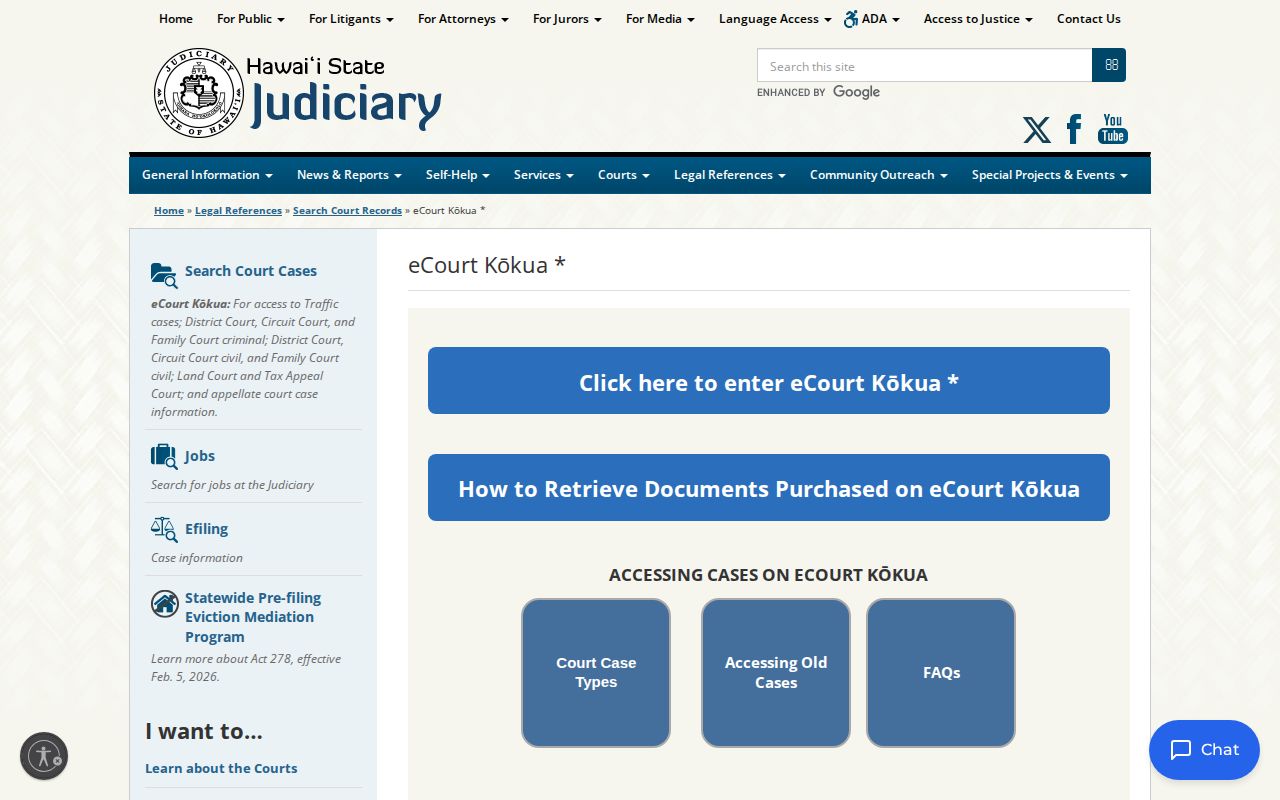
Treat the court interface as a way to understand a case record. Never use it to guess that a warrant is active. For the wider Hawaii busted mugshots and official arrest-record path, start with the statewide records and arrest search. eCourt Kōkua spans criminal matters in District, Circuit, and Family Court. It also covers other case types. Search with the current case-number format or whatever fields the live system offers. Some older migrated cases carry a converted number. It is built from a circuit digit, a case type, and leading zeroes, so a stale number may miss the file. A matching name alone doesn't prove the case involves the person in a notice. When a public case appears, read the docket for its current status. It may show a pending case, a dismissal, an acquittal, or a conviction. A deferred outcome or another result may appear too. Public documents show up only when the Judiciary posts a PDF. Sealed or confidential material never opens online. And even a full case result can't confirm whether a warrant is active today. The Hawaiʻi County booking-log page covers a different need: a countywide arrest list with a short window. It can document a recent bust there. But it is not a wanted list, and it skips the rest of the state.
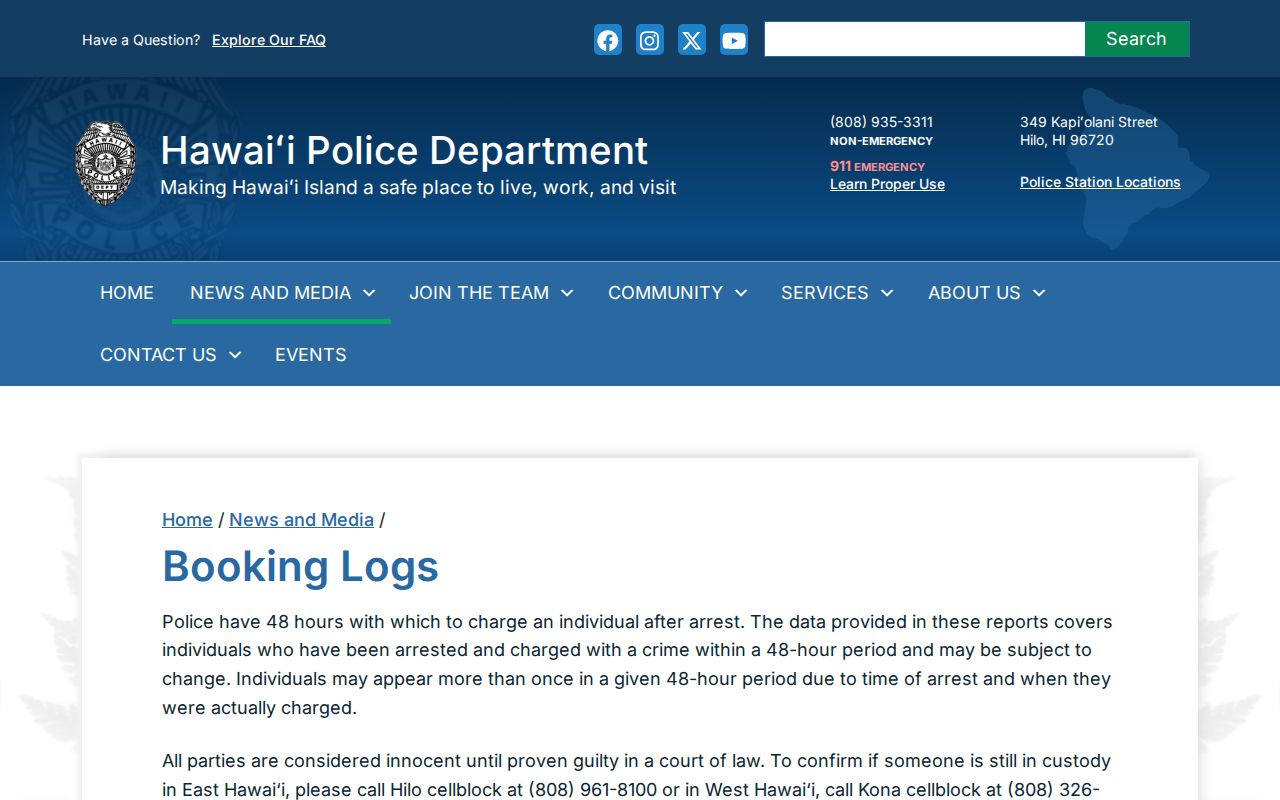
A booking log answers one narrow question. Did that agency report an arrest? It cannot show that a person has an active warrant today.
Verification: A name on a notice is a starting point, not an answer. Agencies update their pages after arrests. Check a current agency source and the court file before drawing a conclusion about any warrant.